
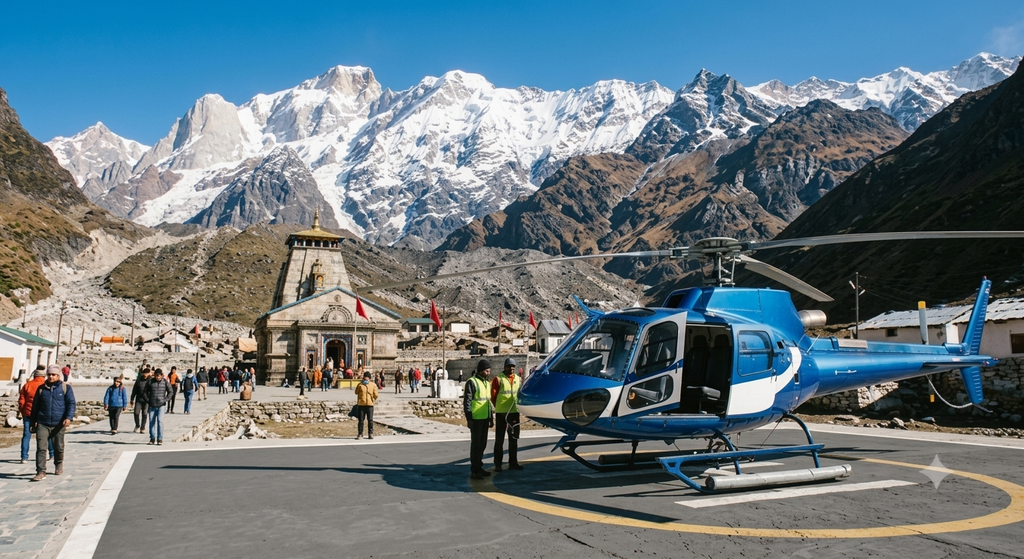
Flying via helicopter charter to high-altitude Himalayan shrines like Kedarnath (~3,583 m) and Badrinath (~3,133 m) drastically cuts travel time, but operating under Visual Flight Rules (VFR) at high elevations comes with strict regulatory checks.
Whether you are traveling with elderly family members or organizing a private charter, understanding official Directorate General of Civil Aviation (DGCA) flight policies, passenger weight rules, and health advisories ensures a smooth journey without last-minute penalties.
1. Passenger Baggage & Weight Allowances
Helicopters operating in mountain sectors operate under severe payload restrictions to maintain safety margins.
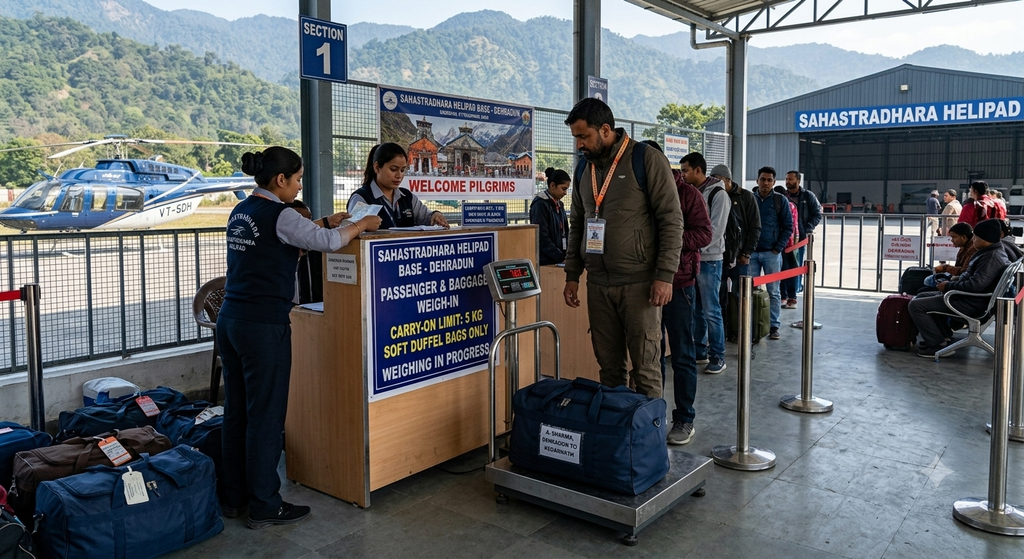
- Strict 5 kg Luggage Cap: Every passenger is allocated a maximum of 5 kg of personal baggage. Only soft duffel bags supplied by the operator or compact soft-sided bags are permitted; hard-shell suitcases and trolley bags are strictly prohibited.
- Body Weigh-In Procedures: Passengers are weighed alongside their duffel bags at base helipads (such as Sahastradhara or Sersi). Total combined weight for 6 passengers must not exceed the aircraft’s high-altitude performance threshold (~420 kg total).
- Overweight Penalties: Declaring incorrect body weight during booking can result in mandatory excess weight charges (typically ₹2,500–₹3,500 per additional kg) or non-refundable cancellation if aircraft load limits are exceeded.
2. Age Guidelines & Medical Requirements
While there is no legal maximum age limit to embark on a pilgrimage, high altitudes bring lower oxygen levels and rapidly changing cold weather.
- Recommended Age Bracket: While open to all devotees with medical consent, the general suggested age bracket for high-altitude heli-travel is 7 to 65 years.
- Senior Citizens (50+ Years): Devotees over 50 years or those with pre-existing conditions (cardiovascular issues, asthma, or high blood pressure) are strongly advised to carry a medical fitness certificate issued by a certified MBBS physician.
- Infants Below 2 Years: Children under 2 years typically travel free of charge seated on an adult’s lap, but mandatory age-proof documentation (birth certificate) must be produced during check-in.
3. Mandatory Registration & DGCA Safety Protocol (2026 Updates)
| Requirement | Details & Compliance |
| Biometric/Digital Registration | Mandatory registration on the Uttarakhand Tourism portal is required prior to flight booking. ID proof (Aadhaar or Passport) must match booking records exactly. |
| Air Traffic Control (ATC) Monitoring | Dedicated ATC posts at Sonprayag and Kedarnath evaluate real-time visibility. Minimum flight visibility of 1,500 meters is strictly enforced under VFR guidelines. |
| Operating Windows | Flights operate strictly between sunrise and sunset; no commercial flights are permitted in low-light or zero-visibility fog conditions. |
4. Altitude Sickness Prevention Checklist
Helicopters rapidly transport passengers from lower elevations (Dehradun ~640 m) to high mountain altitudes (~3,500 m) in under 45 minutes, leaving little time for gradual natural acclimatization.
- Hydrate Constantly: Drink 2–3 liters of water daily, carrying ORS or electrolyte sachets.
- Avoid Heavy Meals: Consume light, non-oily vegetarian meals prior to boarding to reduce motion sickness and digestive discomfort.
- Carry Emergency Medications: Always pack personal prescriptions, basic pain relievers, and anti-motion sickness tablets inside your hand pouch rather than packed duffel bags.
- Recognize Symptoms: Watch for signs of acute mountain sickness (AMS) such as sudden headaches, nausea, or dizziness, and immediately inform helipad medical personnel if symptoms arise.